Softwashing Across the Ribble Valley and Lancashire
Low pressure cleaning with a biodegradable biocide that kills algae, lichen and moss at the root instead of blasting it off the surface.
Family-run
Justin and the team do the work. No call centres, no subcontractors.
Fully insured
Full public liability cover on every job, domestic or commercial.
Safe methods
Biodegradable products and low pressure, matched to the surface.
Free quotes
No obligation, and no charge for coming out to look at the job.
What softwashing actually involves
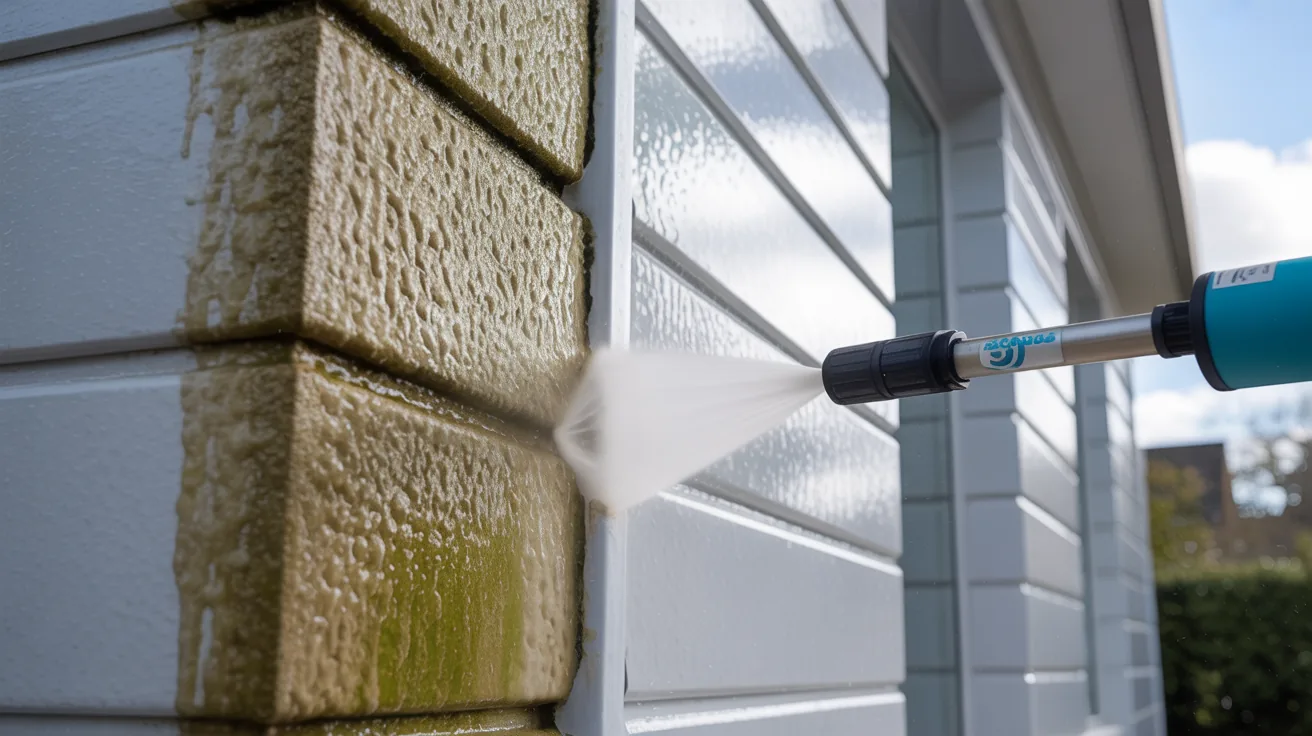
Softwashing is exterior cleaning done with chemistry rather than force. Water is applied at low pressure, similar to a garden hose, carrying a biodegradable biocide that is usually sodium hypochlorite based with a surfactant added so it clings to vertical surfaces. It kills algae, lichen and moss at the root rather than simply knocking the top growth off, so regrowth is slow. Because there is no pressure behind it, there is no risk of driving water behind render, raking out mortar or etching soft stone.
Softwashing is the method we reach for on most exterior cleaning jobs, and it is the work this business was built around. Instead of forcing dirt off a surface with pressure, we apply a biodegradable biocide at roughly garden hose pressure and let the chemistry do the work. The solution soaks into the algae, lichen and moss, kills it at the root, and the growth then breaks down and washes away over the following days and weeks.
That difference matters more in Lancashire than in most places. A wet westerly climate means north and west facing elevations green up first, and render, roof tiles and stone all hold moisture long enough for spores to settle. A jet wash strips the visible growth but leaves the root structure sitting in the surface, so the green returns within a season or two. Softwashing removes the organism itself, which is why the finish holds for years rather than months.
We survey before we quote. Different surfaces take different mix strengths, and a silicone render needs a gentler approach than a rough cast wall or a stone flag. Windows, doors, planting and lawns are covered or wetted down before anything is applied, and everything gets rinsed afterwards. Justin runs every job with a small team and no subcontractors, so the person who quoted your property is the person on site doing the work.
Suitable for
- Silicone, monocouche and K-Rend rendered walls
- Concrete and clay roof tiles
- Painted masonry, pebbledash and rough cast
- UPVC cladding, fascias, soffits and conservatory roofs
- Timber fencing, decking and garden rooms
- Stone and brick elevations too soft to take pressure
Problems it solves
- Green and black algae film spread across a whole elevation
- Red algae streaking on light coloured render
- Moss and lichen crusts on roof tiles and ridge lines
- Growth that keeps returning within months of a jet wash
- Slippery, discoloured decking, fencing and painted timber
- A property that looks tired and neglected with nothing structurally wrong
How we approach softwashing
Survey and free quote
We look at every elevation, identify the substrate, check the condition of the render, pointing and seals, and note anything that needs protecting. The quote is free and carries no obligation.
Protecting the surroundings
Plants, lawns, ponds and gravel near the work are wetted down or sheeted. Windows, vents and any open joints are checked and covered where needed, so nothing takes solution that should not.
Applying the softwash
The biocide is mixed to a strength matched to that surface and applied at low pressure from the ground or from safe access. We work in sections so that no area dries out before it has dwelled.
Dwell time
The solution stays on the surface long enough to penetrate the growth and kill it at the root. On heavy lichen this single step decides whether the result holds for years or for months.
Rinse and tidy
Surfaces are rinsed at low pressure, run off is directed away from planting and ponds, and we clear down. Glass and sills are wiped where the work has touched them.
Weathering out
Dead growth carries on breaking down and washing off in the rain over the following weeks. Roofs and heavy lichen keep improving for a month or more after we have left site.
What you get
- No pressure against render, seals or mortar, so no risk of water ingress
- Kills growth at the root, so regrowth is slow rather than immediate
- Results typically hold for 2 to 4 years on walls in this climate
- Biodegradable biocides, rinsed and diluted down on completion
- One method covers render, roof, cladding and timber on the same visit
- Free, no obligation quote given by the person who will do the work
Softwashing questions
Related services
- Render CleaningLow pressure softwashing that kills green and red algae at root level
- Roof CleaningMoss stripped off by hand and killed at the root, with the gutters and
- DOFF Superheated Water CleaningChemical free stone cleaning at up to around 150C and very low pressur
- Patio CleaningAlgae, black spot and moss removed from garden paving using the gentle
Need softwashing doing?
Free quotes, no obligation, and an honest answer about whether the job actually needs doing.