Patio Cleaning
Algae, black spot and moss removed from garden paving using the gentlest method that will actually shift it.
Family-run
Justin and the team do the work. No call centres, no subcontractors.
Fully insured
Full public liability cover on every job, domestic or commercial.
Safe methods
Biodegradable products and low pressure, matched to the surface.
Free quotes
No obligation, and no charge for coming out to look at the job.
What patio cleaning actually involves
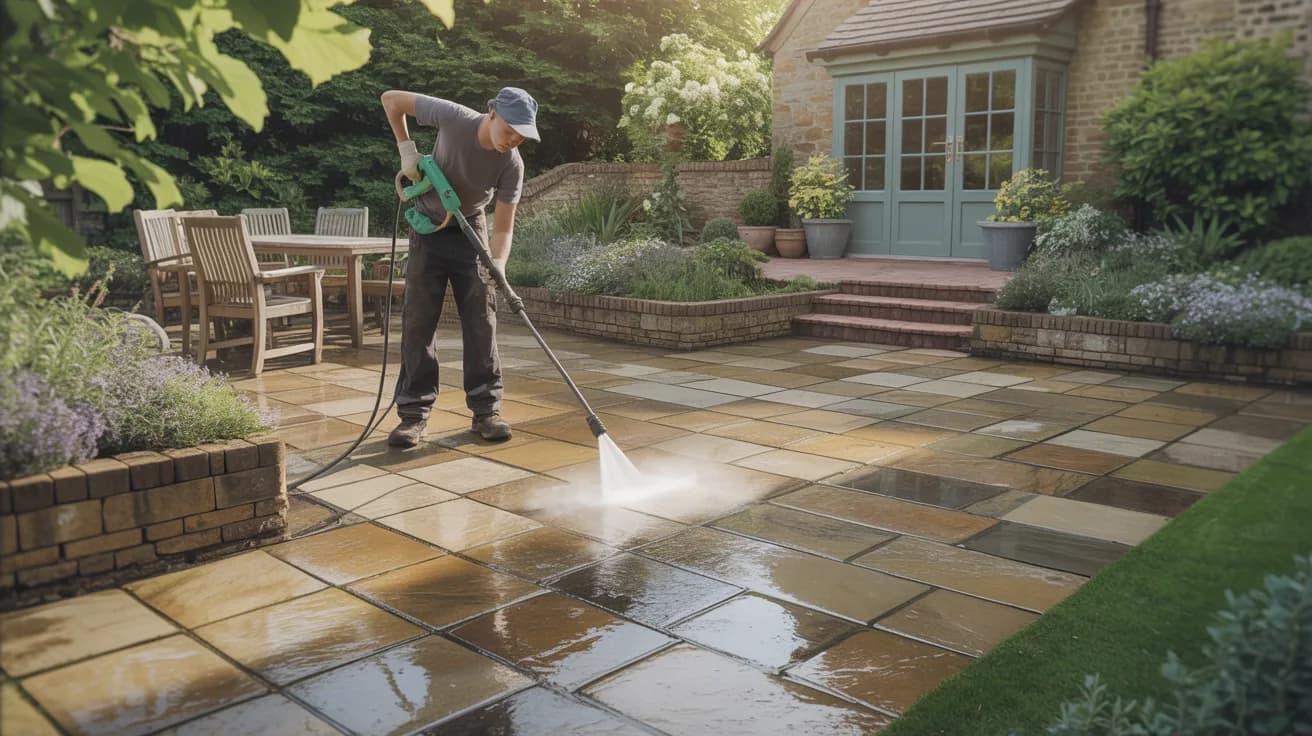
Patio cleaning is the removal of algae, moss, lichen, black spot and ground in dirt from garden paving, using the gentlest method that will genuinely shift it. On hard, dense surfaces that can mean controlled pressure washing at a sensible distance. On soft or aged stone it means a low pressure softwash with a biodegradable biocide that kills the growth at the root, so the paving stays clean for far longer than a surface blast would leave it.
Most patios in the Ribble Valley go green on the same side of the garden every year. The north facing edge under a hedge or a boundary wall holds damp long after the rest has dried, and that is where algae, moss and black lichen spotting get their grip. We start by working out what the paving actually is, because the answer changes the method completely. York stone, Indian sandstone, porcelain and pressed concrete all behave differently under pressure, under heat and under a biocide.
Riven sandstone has an open, textured face and soft jointing. Hit it with a turbo nozzle held close in and you will scour the surface, blow the pointing out of the joints and leave stripes that never fade back. Porcelain is the opposite problem. It is dense and almost non porous, so the dirt sits on top as a thin film, often alongside grout haze left over from installation, and it wants a flat, even clean and a proper rinse rather than brute force.
Once the slabs are clean, the joints matter just as much. Washed out pointing lets water sit under the paving and gives weed seed somewhere to germinate, so we tell you honestly whether the jointing needs replacing rather than topping up. Sealing is optional and it is not right for every patio. On porous sandstone it does slow down staining from leaf fall, barbecue grease and spilled drinks, and we will say plainly when we think it is worth the money and when it is not.
Suitable for
- Aged York stone flags on period cottages and farmhouses
- Riven and sawn Indian sandstone patios
- Porcelain and large format vitrified paving
- Pressed concrete slabs and pattern imprinted terraces
- Stone steps, thresholds, copings and low garden walls
- Millstone grit setts and old flagged yards
Problems it solves
- A green algae film that turns genuinely slippery in autumn
- Black lichen spotting that will not brush or scrub off
- Moss and weeds pushing up through open joints
- Grout haze and installation residue left on porcelain
- Leaf tannin, barbecue grease and rust marks from furniture
- Paving gone patchy, with clean and dirty areas side by side
How we approach patio cleaning
Identify the paving
We look at the slab itself, the jointing and how it was laid. Sandstone, porcelain, concrete and old York stone each get a different pressure, a different chemical and a different nozzle, so this comes first.
Clear and protect
Furniture, pots and barbecues are moved clear. Nearby planting and lawn edges are wetted down and sheeted where needed, and we check where the surface water is going to run before anything is switched on.
Remove the growth
Heavy moss and weed is lifted by hand and by blade out of the joints first. Taking it out dry means the clean is not simply pushing sodden growth around the patio and back into the pointing.
Clean to suit the surface
Hard, sound paving gets a controlled pressure clean with the lance kept moving and at distance. Soft, aged or delicate stone is softwashed at low pressure with a biodegradable biocide and given time to work.
Re-joint and finish
Open joints are re-sanded or re-pointed as the paving requires, and the whole area is rinsed down so no residue dries on the surface. We then walk it with you before packing away.
Optional sealing
If sealing is worthwhile and the paving is properly dry, a breathable sealer is applied to slow down future staining. We will tell you if your patio is better left unsealed rather than sell it regardless.
What you get
- Slip risk cut right back before the wet months
- No scouring, striping or blown out pointing from over pressure
- Growth killed at the root, so it returns slowly rather than in weeks
- Joints left sound instead of washed hollow
- Biodegradable biocides, safe around a normal domestic garden once dry
- Free, no-obligation quote with the method explained before we start
Patio Cleaning questions
Related services
- Driveway CleaningMoss, weeds, oil and traffic dirt cleared off, and the joints put back
- Pressure WashingThe right tool for block paving, concrete and stone flags, and the wro
- SoftwashingLow pressure cleaning with a biodegradable biocide that kills algae, l
- DOFF Superheated Water CleaningChemical free stone cleaning at up to around 150C and very low pressur
Need patio cleaning doing?
Free quotes, no obligation, and an honest answer about whether the job actually needs doing.