Driveway Cleaning
Moss, weeds, oil and traffic dirt cleared off, and the joints put back properly afterwards.
Family-run
Justin and the team do the work. No call centres, no subcontractors.
Fully insured
Full public liability cover on every job, domestic or commercial.
Safe methods
Biodegradable products and low pressure, matched to the surface.
Free quotes
No obligation, and no charge for coming out to look at the job.
What driveway cleaning actually involves
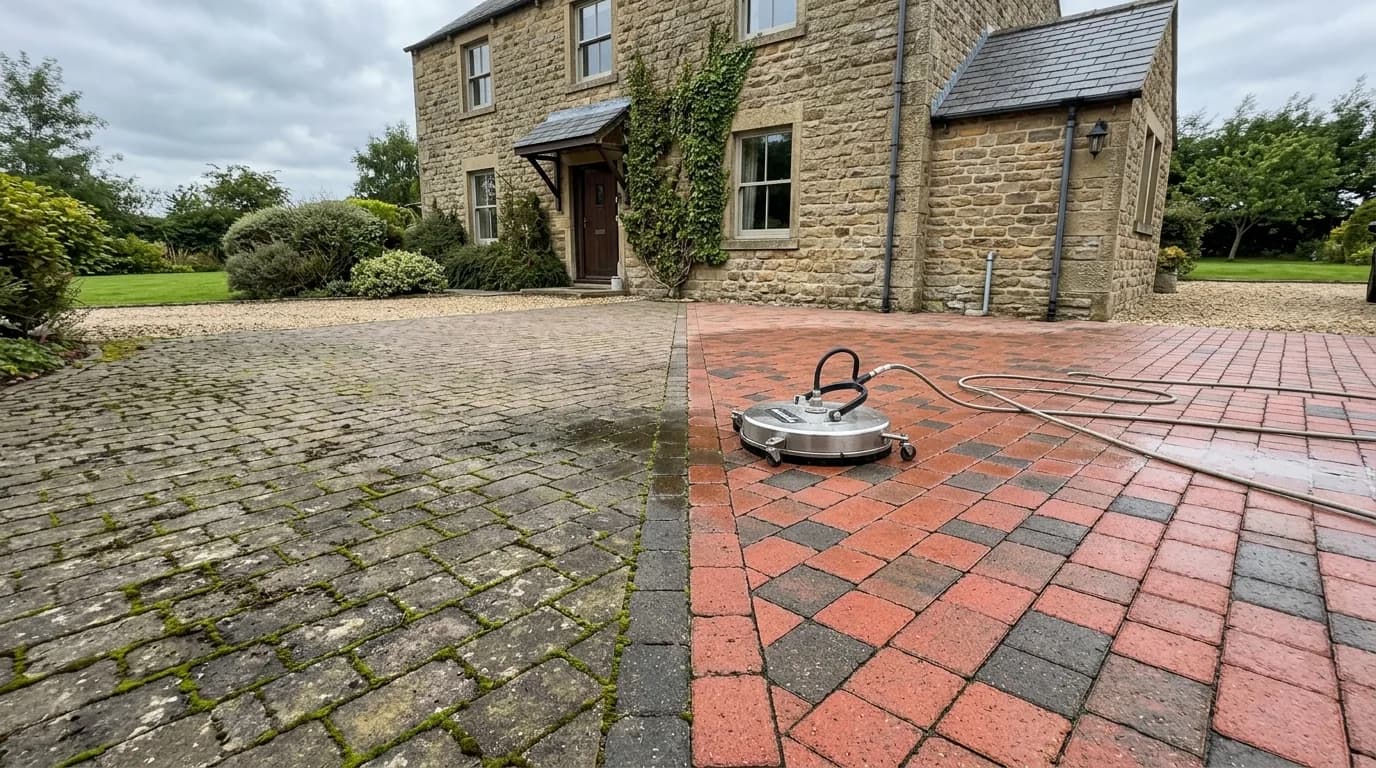
Driveway cleaning is the removal of moss, weeds, algae, tyre rubber and ground in traffic dirt from the drive surface, followed by whatever that surface needs to stay stable afterwards. On block paving that means re-sanding every joint with kiln-dried sand. On tarmac and resin bound it means keeping the pressure low, so the binder holding the surface together is left intact rather than washed out.
A driveway takes more punishment than any other surface on the property. Tyres grind grit into the top of the blocks, engine drips leave dark patches near the gate, and the shaded strip along the house wall carries a permanent film of green. Cleaning is only half of the job. What happens to the joints afterwards is what decides whether the drive stays sound or starts to move under the wheels within a season or two.
Every driveway surface wants its own approach. Block paving takes a proper pressure clean and must then be re-sanded. Tarmac must not be blasted, because high pressure water strips the bitumen binder off the top and loosens the chippings, so it gets a low pressure clean and a biocide instead. Resin bound is porous and does not tolerate a lance held close in, since the resin skin can break and stones pull out. Imprinted concrete usually needs its old sealer stripping and replacing rather than just washing.
We also deal with the things that make a drive look tired rather than simply dirty. Oil and diesel need a degreaser worked in and lifted, not a stronger nozzle. Weeds have to come out at the root before cleaning starts, otherwise they push straight back up through the fresh sand. Moss in a north facing joint is a symptom of damp sitting there, which usually points at drainage or aspect rather than at the paving being at fault.
Suitable for
- Block paved and cobble setted driveways
- Tarmac drives, farm lanes and parking areas
- Resin bound and resin bonded surfaces
- Brushed, power floated and pattern imprinted concrete
- Gravel drives with a weed and moss problem in the edges
- Commercial car parks, yards and delivery areas
Problems it solves
- Weeds and moss growing thick along the joints and edges
- Oil, diesel and hydraulic staining near the garage or gate
- Black tyre scuffing and turning circle marks on block paving
- Blocks that rock or sink because the joint sand has washed out
- A slippery green film across the shaded side of the drive
- Ground in silt making a light coloured drive look permanently grey
How we approach driveway cleaning
Survey the surface
We identify the drive type, check the falls and drainage, look for loose or sunken blocks and note where oil staining sits. That tells us the pressure, the products and whether any repair is needed first.
Weed and moss removal
Weeds are pulled or cut out at the root and heavy moss is scraped from the joints before any water is used. Cleaning over live weed roots simply grows them straight back through the new sand.
Clean to the surface type
Block paving and concrete take a rotary surface cleaner for an even finish with no lance stripes. Tarmac and resin bound get low pressure and a biocide, which protects the binder holding the surface together.
Treat the stains
Oil, diesel and rust are spot treated with a degreaser or a targeted product, worked in and lifted rather than blasted. Old, deeply soaked oil may lighten considerably rather than disappear completely.
Re-sand the joints
Kiln-dried sand is brushed into every joint of a block paved drive and worked down until the joints are full. This is not an optional extra, it is what holds the paving together under load.
Clear down and optional seal
Silt and debris are removed from gullies and channels, the surrounds are washed off and, if you want it, a sealer is applied once the surface has dried out fully.
What you get
- Joints refilled with kiln-dried sand, so the paving stays locked together
- Weeds removed at the root rather than cut off at the surface
- Tarmac and resin cleaned without stripping the binder
- Oil and tyre marks treated as stains, not attacked with more pressure
- Drainage channels and gullies cleared of the silt we have moved
- Family-run and fully insured, with free no-obligation quotes
Driveway Cleaning questions
Driveway Cleaning near you
We cover the Ribble Valley and the surrounding towns from our base in Clitheroe.
Related services
- Patio CleaningAlgae, black spot and moss removed from garden paving using the gentle
- Pressure WashingThe right tool for block paving, concrete and stone flags, and the wro
- SoftwashingLow pressure cleaning with a biodegradable biocide that kills algae, l
- Brick CleaningMortar haze, soot staining and green growth taken off brickwork withou
Need driveway cleaning doing?
Free quotes, no obligation, and an honest answer about whether the job actually needs doing.