Graffiti Removal
Fast removal of tags, throw-ups and paint from brick, stone, render and cladding, with the method matched to the surface underneath.
Family-run
Justin and the team do the work. No call centres, no subcontractors.
Fully insured
Full public liability cover on every job, domestic or commercial.
Safe methods
Biodegradable products and low pressure, matched to the surface.
Free quotes
No obligation, and no charge for coming out to look at the job.
What graffiti removal actually involves
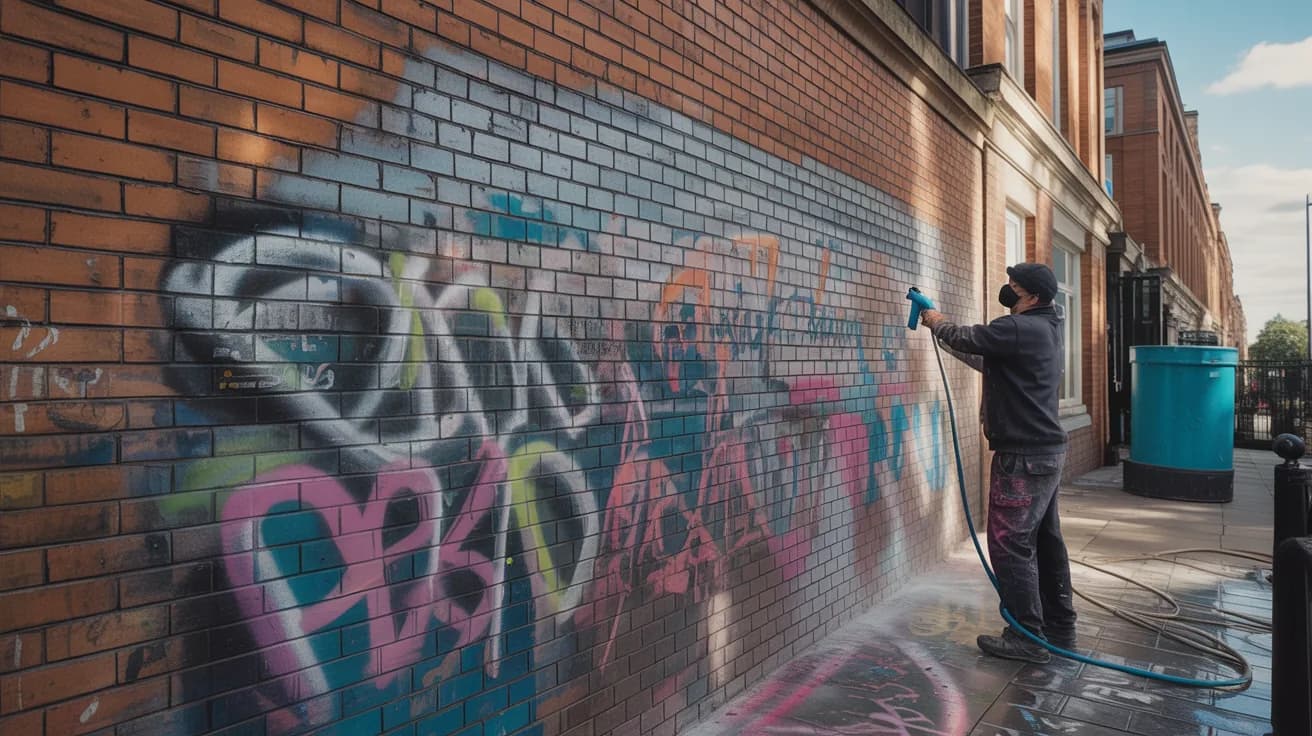
Graffiti removal is the controlled removal of spray paint, marker, paste-ups and other coatings from a building surface without leaving a shadow, a bleached patch or a scoured area where the tag used to be. The work is as much about protecting what sits underneath as it is about shifting the paint, which is why the method changes with every substrate we meet.
Speed matters more with graffiti than with almost anything else we clean. Aerosol paint keeps curing after it has been sprayed, and the carrier solvents drive pigment down into the pores of brick, stone and render while it does. A tag lifted within a few days usually comes away cleanly. The same tag left through a summer has bonded into the surface, and shifting it then means a stronger method, more risk to the substrate and a bigger bill.
There is no single graffiti product that works on everything. Powder-coated cladding, glazed brick and painted steel will take a solvent gel that would ruin soft sandstone. Porous stone and lime-mortared brick need a poultice or the TORC vortex instead, because the pigment has to be drawn back out rather than scrubbed at. We identify the substrate first and the paint second, then choose the system to suit both.
Most of our graffiti work is for businesses, schools, parish councils and property managers dealing with the same wall more than once. Where that is the case, a sacrificial anti-graffiti coating is usually the cheaper answer across a couple of years, because the next tag comes off with hot water instead of a full removal visit. We are happy to quote both ways so you can see the difference for yourself.
Suitable for
- Commercial frontages, roller shutters and signage
- School and academy buildings, walls and outbuildings
- Council property, subways, bus shelters and street furniture
- Listed and conservation-area stonework
- Industrial units and profiled metal cladding
- Boundary walls, gate piers and bridge parapets
Problems it solves
- Fresh tags that need to be gone before the business opens
- Old graffiti that has cured into porous brick or stone
- Ghosting and shadowing left by a previous removal attempt
- Repeat targeting of the same wall or shutter
- Paint on a listed elevation where aggressive methods are not allowed
- A clean rectangle left behind where only the tag was treated
How we approach graffiti removal
Rapid response and assessment
We get eyes on it quickly, either in person or from a photograph you send over, and identify the substrate and the paint type. Offensive graffiti on a public frontage is prioritised ahead of everything else in the diary.
Test patch out of sight
Every product is tested on a small, hidden area first. That confirms it lifts the paint and, just as importantly, that it does not bleach, etch or add a sheen to the surface around it.
Method selection
Solvent gel on coated and non-porous surfaces, poultice on porous stone and brick, TORC where the substrate is sensitive or listed. On a coated steel shutter, heat and low pressure water alone will often do it.
Removal and rinse
The chosen system is worked across the whole panel rather than just the painted area, so no clean rectangle is left behind. Everything is then rinsed at low pressure and the residue collected from sheeting.
Shadow treatment
Where pigment has gone deep, a second poultice draws the remaining stain out over several hours. This is normal on older graffiti and is planned for from the start rather than treated as a surprise.
Protective coating if wanted
On repeatedly targeted walls we can apply a sacrificial coating so the next incident becomes a hot water job. We explain what it does to the appearance of the wall before you decide either way.
What you get
- Quick response on commercial, school and council work
- Method matched to the substrate, not one product used on everything
- TORC available for listed and sensitive stone
- Full panel treated, so no bright patch is left where the tag was
- Sacrificial anti-graffiti coatings available for repeat locations
- Family-run and fully insured, with no subcontractors on your site
Graffiti Removal questions
Related services
- Brick Paint RemovalControlled removal of masonry paint from brick and stone using poultic
- DOFF Superheated Water CleaningChemical free stone cleaning at up to around 150C and very low pressur
- Brick CleaningMortar haze, soot staining and green growth taken off brickwork withou
- Pressure WashingThe right tool for block paving, concrete and stone flags, and the wro
Need graffiti removal doing?
Free quotes, no obligation, and an honest answer about whether the job actually needs doing.