
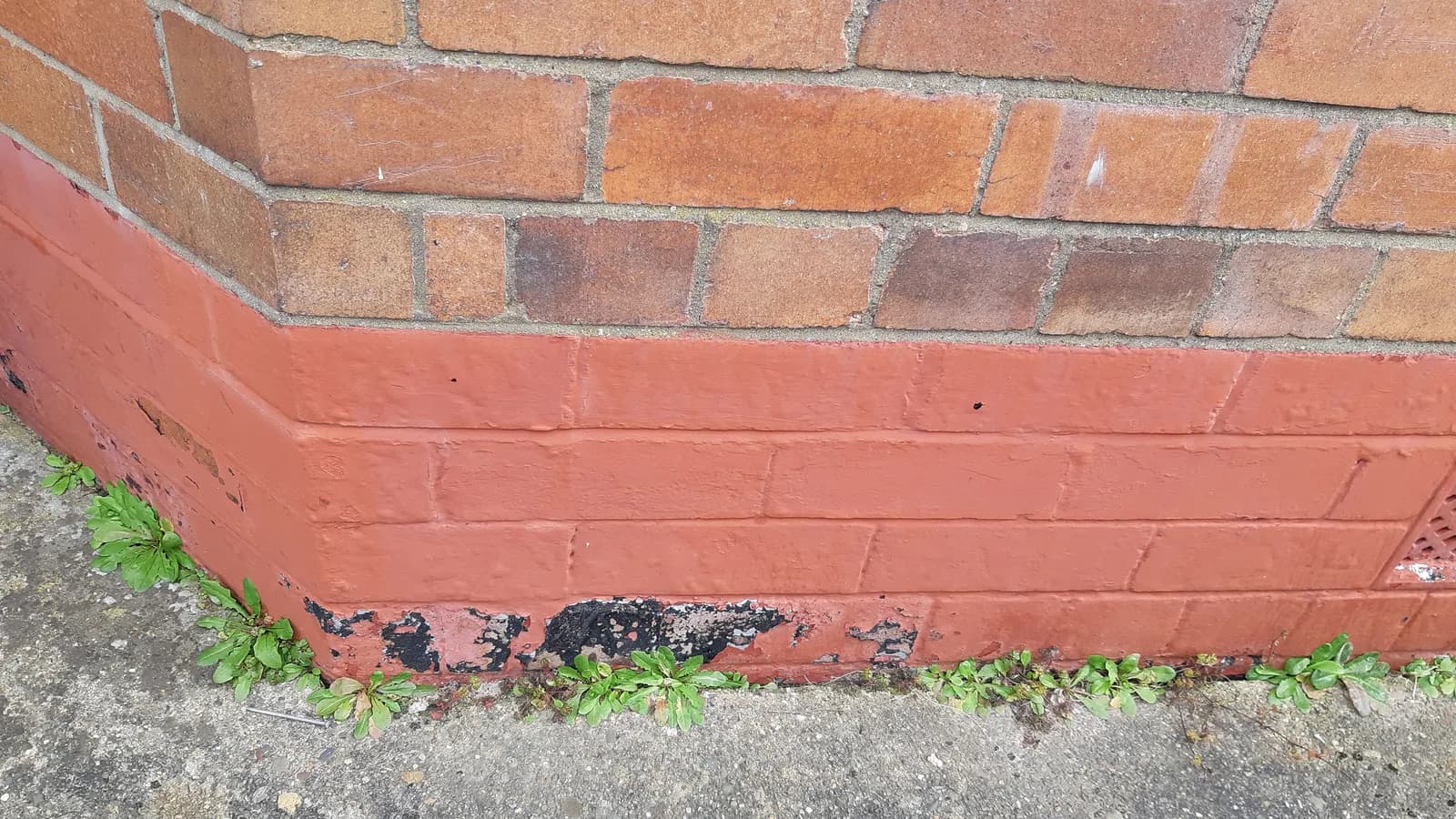
Brick Paint Removal
Controlled removal of masonry paint from brick and stone using poultice systems and TORC, so the wall can breathe again.
Family-run
Justin and the team do the work. No call centres, no subcontractors.
Fully insured
Full public liability cover on every job, domestic or commercial.
Safe methods
Biodegradable products and low pressure, matched to the surface.
Free quotes
No obligation, and no charge for coming out to look at the job.
What brick paint removal actually involves
Brick paint removal is the controlled stripping of masonry paint, limewash or other coatings from brick and stone so the original face is exposed again. It is done with softening poultices and low pressure vortex cleaning rather than abrasive blasting, because the fired outer skin of a brick is the part that keeps water out. Damage that skin and you end up with a wall that soaks up more water than it did painted.
Painted brick looks tidy for a few years and then it starts to fail. Masonry paint forms a film across the face of the brick, and once that film cracks, water gets in behind it and cannot get back out. Through a Lancashire winter that trapped moisture freezes, expands and lifts the fired outer skin off the brick. That is spalling, and it does not grow back. Taking the paint off properly is the only way to let a wall dry out again.
We remove paint from masonry with poultice systems and the TORC rotary vortex, not with grinders, needle guns or a jet lance. A poultice is a paste that sits on the wall, softens the coating from the surface down and is then peeled away with the paint held inside it. TORC works differently, using a gentle swirling vortex of low pressure water, air and fine granulate to lift coatings without cutting into the brick face or the mortar joints.
Every wall gets a trial patch before we quote a full elevation. Paint type, how many coats are on, the hardness of the brick and the state of the pointing all change the method and the time it takes. On a listed building or a property inside a conservation area, that trial patch is also what the conservation officer will want to see, and consent may be needed before any paint comes off at all.
Suitable for
- Victorian and Edwardian red brick terraces that were painted over
- Period farmhouses and cottages in sandstone or millstone grit
- Conservation-area frontages and traditional shop fronts
- Painted plinths, string courses and moulded brick detailing
- Boundary walls and gate piers coated in masonry paint
- Former mill buildings and industrial brickwork under conversion
Problems it solves
- Masonry paint flaking and peeling away in sheets
- Spalled and blown brick faces caused by trapped moisture
- Damp appearing inside the property on painted external walls
- A painted frontage that no longer matches neighbouring houses
- Earlier stripping attempts that have scarred or scoured the brick
- Conservation pressure to reinstate the original brickwork
How we approach brick paint removal
Survey and paint identification
We look at what is actually on the wall: masonry paint, limewash, a plastic-based coating or several layers of each. Brick hardness, pointing condition and any existing spalling all get recorded before a price is given.
Trial patch
A small, discreet area is stripped using the method we intend to use across the elevation. It proves the coating will release cleanly and shows exactly what condition the brick underneath is really in.
Consent and protection
Where listed building consent or conservation approval is needed, that has to be in place first. Windows, doors, planting and paving are then sheeted and the ground protected before any product goes on.
Poultice or TORC application
Poultice is applied in bands and left to draw for the required dwell time, then peeled off with the coating held in it. Where TORC is the better route, the vortex runs at the lowest effective granulate feed.
Rinse and neutralise
The wall is rinsed at low pressure and, where a chemical poultice has been used, neutralised so nothing is left sitting in the pores of the brick to bloom or stain months later.
Inspection and aftercare
We walk the elevation with you, point out any brick or pointing that needs a bricklayer, and explain how the wall should be left to dry out over the following months before anything else is done to it.
What you get
- The wall can breathe again, so trapped moisture has somewhere to go
- Original brick colour and texture come back
- No cutting, scarring or opened joints from abrasive methods
- Suitable for listed and conservation-area properties
- Trial patch first, so you see the result before committing to a full elevation
- Family-run and fully insured, with free no-obligation quotes
Brick Paint Removal questions
Related services
- Brick CleaningMortar haze, soot staining and green growth taken off brickwork withou
- DOFF Superheated Water CleaningChemical free stone cleaning at up to around 150C and very low pressur
- Heritage Stone and Brick RestorationConservation-led cleaning of churches, listed farmhouses, mill buildin
- Graffiti RemovalFast removal of tags, throw-ups and paint from brick, stone, render an
Need brick paint removal doing?
Free quotes, no obligation, and an honest answer about whether the job actually needs doing.