
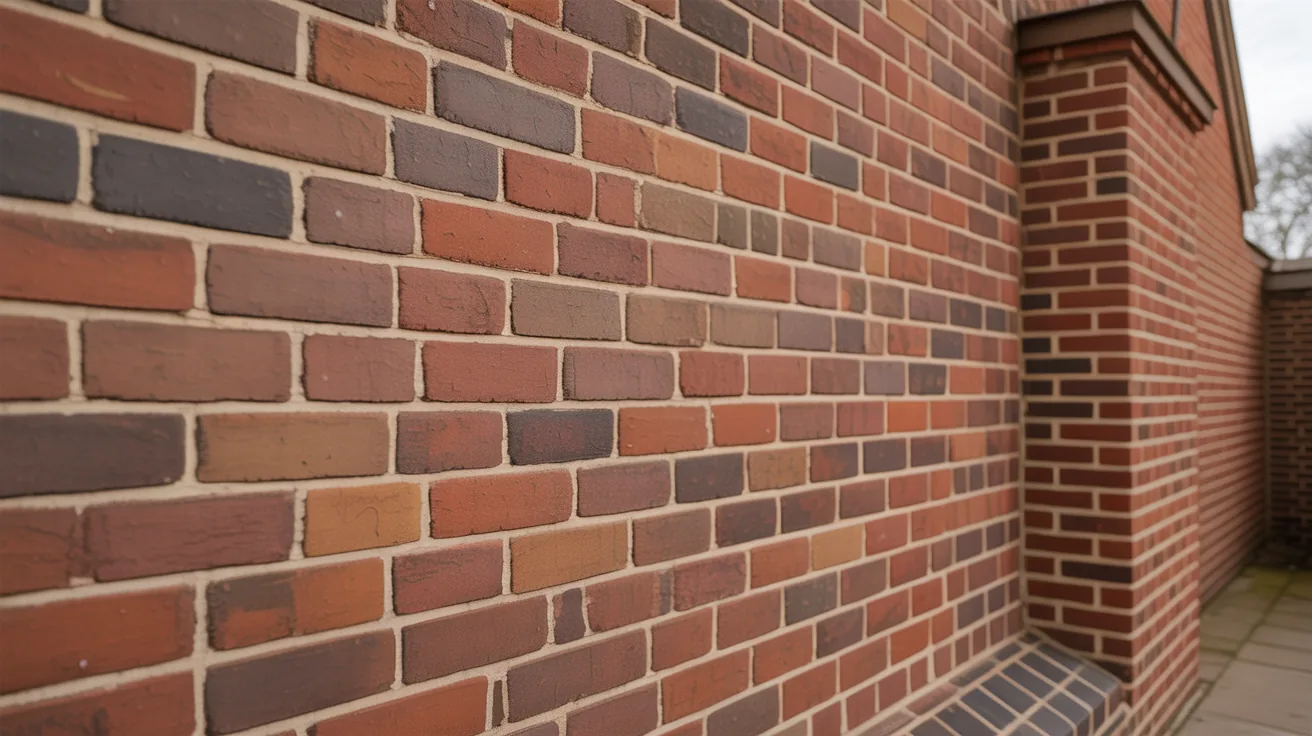
Brick Cleaning
Mortar haze, soot staining and green growth taken off brickwork without damaging the fired face or the pointing.
Family-run
Justin and the team do the work. No call centres, no subcontractors.
Fully insured
Full public liability cover on every job, domestic or commercial.
Safe methods
Biodegradable products and low pressure, matched to the surface.
Free quotes
No obligation, and no charge for coming out to look at the job.
What brick cleaning actually involves
Brick cleaning is the removal of surface staining from brickwork without damaging the fired face of the brick or the mortar joints holding it together. Depending on what is actually on the wall, that can mean superheated water, a low pressure softwash with a biodegradable biocide, a poultice, or a carefully selected masonry cleaner. The aim is always the gentlest thing that will shift it, proven on a test patch first.
Brickwork does not get dirty in only one way. A new build carrying mortar haze across the face has a completely different problem to a mill terrace holding decades of soot, and both are different again to a wall covered in white bloom that somebody has told the owner is damp. Before we quote, we work out which of those we are actually looking at, because the wrong product on the wrong brick causes damage that cannot be undone afterwards.
Lancashire red brick is the one to be careful with. A lot of it is soft pressed or handmade, with a hard fired outer skin protecting a much softer body underneath. Strong hydrochloric acid cleaners, the sort sold over the counter as brick acid, eat through that skin, dissolve lime out of the mortar joints and can draw iron and manganese salts to the surface, leaving brown and yellow staining that looks worse than the mess you started with.
Where we can, we clean brick with heat and water instead of chemistry. The DOFF system runs superheated water at up to around 150C at the nozzle but at very low pressure, which lifts carbon staining, moss and lichen without leaving any residue behind in the wall. It is the method conservation officers accept on listed buildings, and it works just as well on an unlisted Victorian terrace. Where a cleaner genuinely is needed, we test a small patch first on pre-wetted brickwork.
Suitable for
- New build and extension brickwork with mortar smears and haze
- Lancashire red brick terraces, mills and mill town housing
- Victorian and Edwardian brick facades and chimney stacks
- North and west facing brick elevations that have gone green
- Brick boundary walls, piers, gateposts and outbuildings
- Listed and conservation area brickwork needing a chemical-free method
Problems it solves
- Mortar smears and cement haze left across new brickwork after building
- Decades of pollution and soot staining on older town brick
- White efflorescence bloom that keeps reappearing after being washed off
- Green algae and moss on the shaded, sheltered elevations
- Brown and yellow staining left behind by a previous acid clean
- Brickwork looking tired and dark while the rest of the property has been refreshed
How we approach brick cleaning
Diagnose the staining
Mortar haze, carbon staining, efflorescence and biological growth all look different close up and need different treatment. We identify which you have, and check the brick type and the condition of the pointing.
Test patch
A small, discreet area is cleaned first using the proposed method, then left to dry fully. Brick can look fine while wet and quite different once dry, so this step never gets skipped.
Protect the surroundings
Windows, doors, paintwork, planting and any adjacent stone are sheeted or masked. Where a cleaner is being used, the brickwork is pre-wetted so nothing is drawn deep into the pores of the brick.
Clean the elevation
DOFF superheated water for heritage and heavier soiling, low pressure softwash for biological growth, or a targeted masonry cleaner for mortar residue. We work in controlled sections, top down, keeping edges wet.
Neutralise and rinse
Where any cleaner has been used the wall is rinsed thoroughly and neutralised so nothing is left active in the brick, then the whole elevation is checked once dry for evenness of finish.
What you get
- The fired face of the brick left intact rather than etched open
- Pointing protected instead of having the lime washed out of it
- DOFF option leaves no chemical residue at all in the masonry
- Test patch first, so you see the result before the whole wall is committed
- Suitable for listed buildings and conservation areas
- Family-run, fully insured, with free no-obligation quotes
Brick Cleaning questions
Related services
- DOFF Superheated Water CleaningChemical free stone cleaning at up to around 150C and very low pressur
- Heritage Stone and Brick RestorationConservation-led cleaning of churches, listed farmhouses, mill buildin
- Brick Paint RemovalControlled removal of masonry paint from brick and stone using poultic
- SoftwashingLow pressure cleaning with a biodegradable biocide that kills algae, l
Need brick cleaning doing?
Free quotes, no obligation, and an honest answer about whether the job actually needs doing.